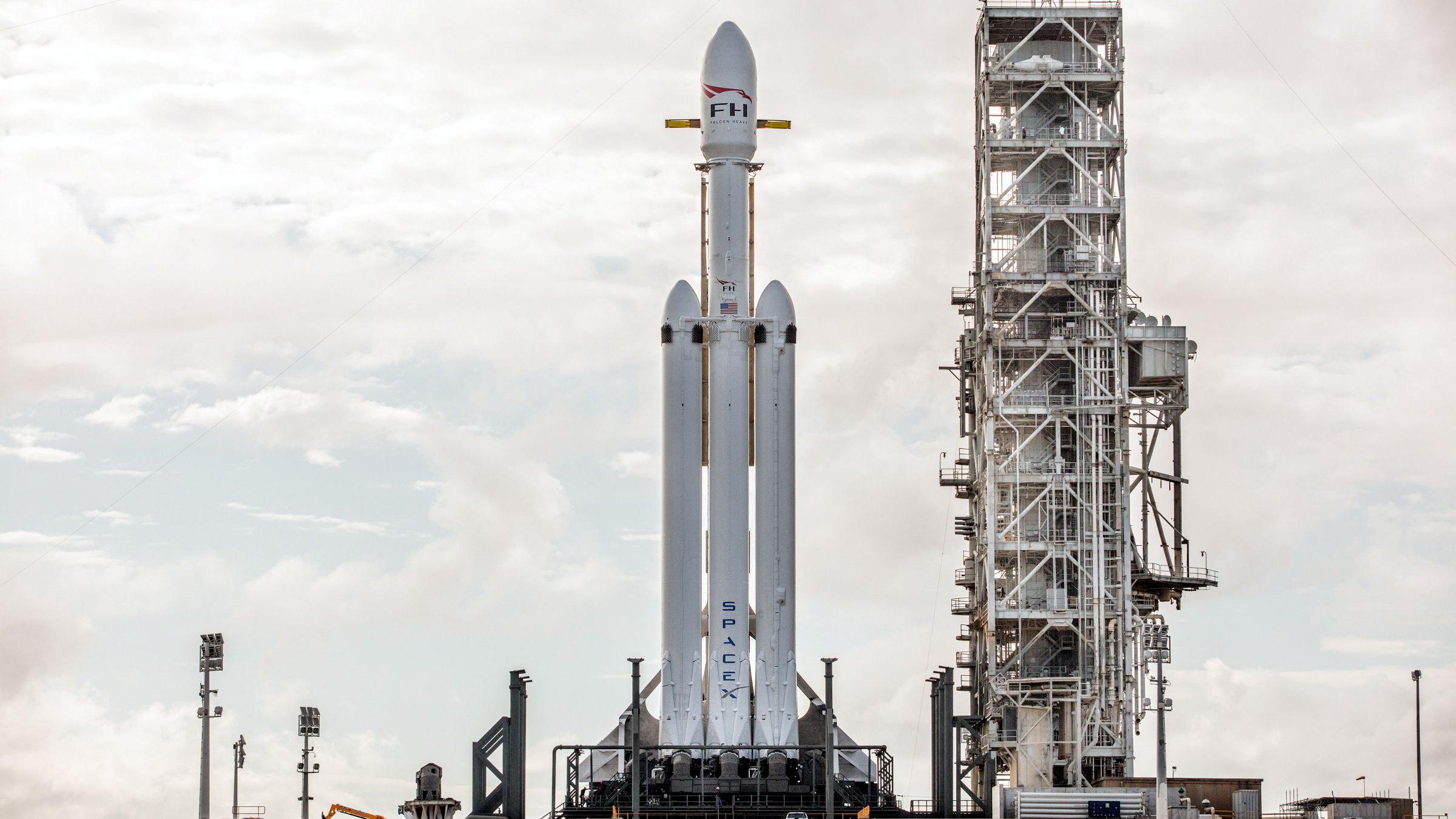
The ground trembles not just from engine ignition—but from anticipation. After 18 months grounded, SpaceX is reloading its most powerful operational rocket: the Falcon Heavy. Set to launch April 27 from Kennedy Space Center, this mission marks not just a return to flight, but a recalibration of heavy-lift dominance in an era of shifting space ambitions.
For spaceflight watchers, engineers, and national security planners alike, this launch isn’t just spectacle—it’s substance. The Falcon Heavy has spent nearly half a decade operating in the shadows of Starship development and routine Falcon 9 landings. But its reemergence signals that heavy-lift demand hasn’t faded. If anything, it’s intensified.
Why Falcon Heavy Vanished—And Why It’s Back
Falcon Heavy’s absence wasn’t due to failure. In fact, its last flight in June 2023—carrying the ViaSat-3 Americas satellite—was technically successful, but ended in partial disappointment when the satellite failed to reach correct orbit due to a spacecraft issue, not the rocket.
Still, the gap since then reflects strategic pragmatism, not technical stagnation.
The Falcon 9 Factor
SpaceX’s workhorse, the Falcon 9, has shouldered an increasing load. With an unparalleled 96 launches in 2023 alone and over 60 already manifest for 2024, the need for Falcon Heavy diminished—for now.
The Falcon 9, especially in its Block 5 variant, can lift up to 22.8 metric tons to low Earth orbit (LEO). For most commercial and government missions, that’s enough. Falcon Heavy, capable of 63.8 tons to LEO, is overkill unless the payload is extremely massive, or destined for deep space.
Limited Demand, High Stakes
Heavy-lift missions remain rare. Only a handful of payloads each year require Falcon Heavy’s muscle:
- Large geostationary satellites with massive fuel loads
- Interplanetary probes (e.g., NASA’s Psyche mission, launched in 2023)
- Classified national security payloads from the U.S. Space Force
With Starlink deployments prioritized and Falcon 9 handling most commercial contracts, Falcon Heavy slipped into standby—until now.
April 27 Mission: What’s Flying This Time?
While SpaceX has not fully disclosed the payload, strong evidence points to the launch of a classified U.S. Space Force satellite, likely part of the X-37B program or a next-generation electronic surveillance platform.
The mission, designated USSF-52, will deploy payloads into high-energy orbits—precisely where Falcon Heavy excels.
Unique Orbit Requirements
Unlike standard geostationary insertions at ~35,786 km, this mission may target:
- Highly elliptical orbits (HEO), used for polar coverage and secure comms
- Medium Earth orbit (MEO), where GPS and early-warning systems operate
- Direct injection to geosynchronous orbit, minimizing satellite fuel use
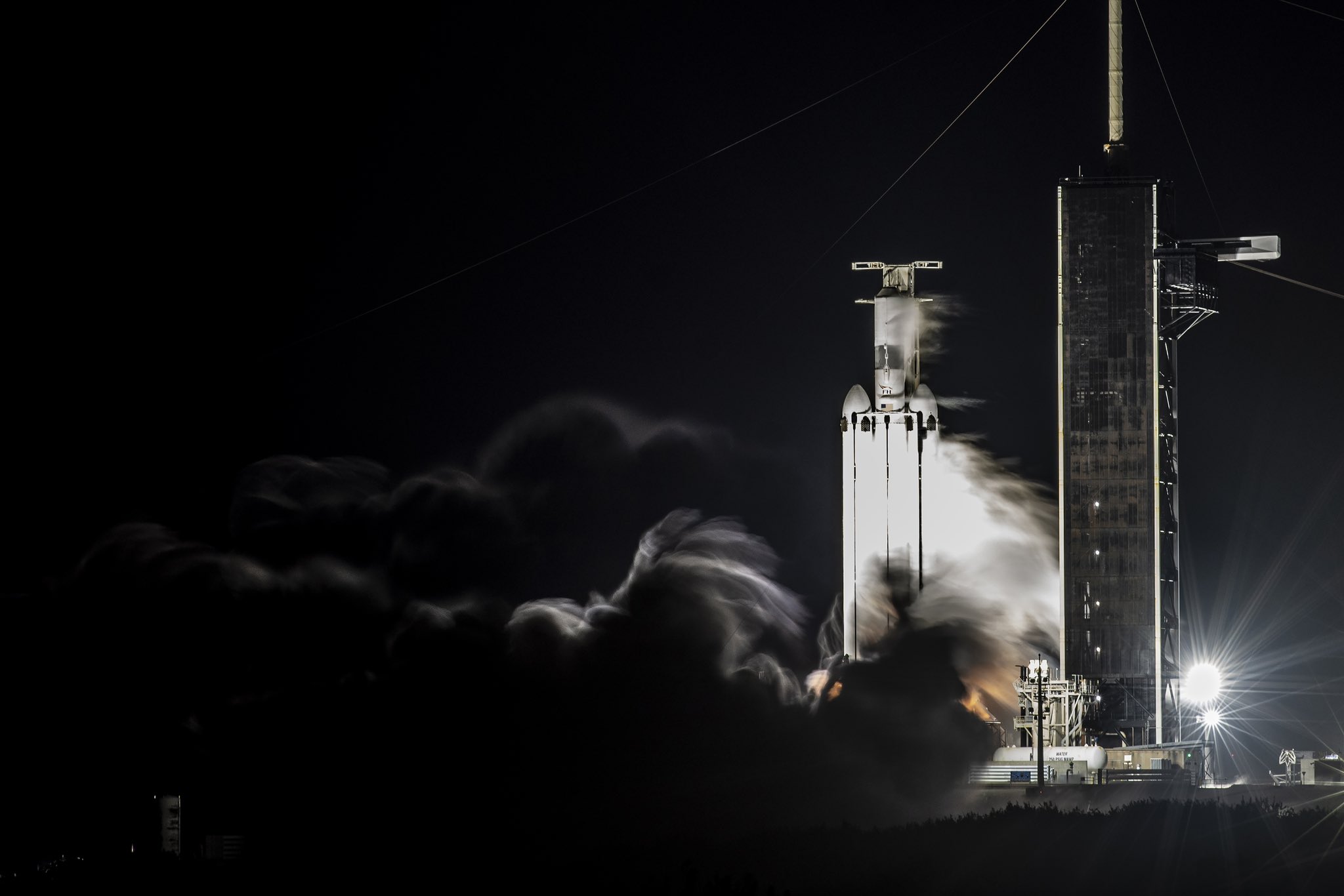
These trajectories demand the combined thrust of 27 Merlin engines and the precision of synchronized side booster recovery.
Without Falcon Heavy, the U.S. would rely on alternatives like ULA’s Vulcan Centaur—still in early operational phases—or risk splitting payloads across multiple launches, increasing cost and risk.
The Launch: Timeline and Viewing Guide
Liftoff is scheduled for April 27, with a launch window opening around 7:00 PM EDT from Launch Complex 39A at Kennedy Space Center.
Key Moments to Watch
| Time (T+) | Event |
|---|---|
| T-0 | Ignition of 27 Merlin engines (1.7 million pounds of thrust) |
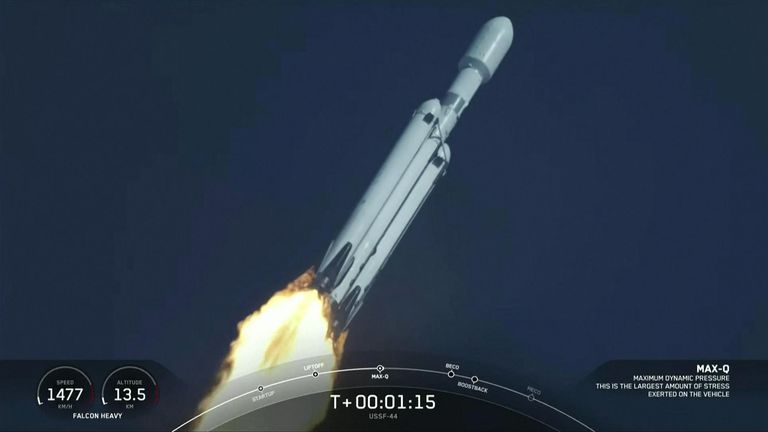
| T+1:18 | Max-Q (maximum aerodynamic pressure) |
| T+2:33 | Booster separation (side cores detach) |
| T+3:20 | Side boosters ignite entry burn |
| T+3:40 | Center core MECO (main engine cutoff) |
| T+3:50 | Fairing separation |
| T+6:30 | Side boosters touch down at LZ-1 and LZ-2 |
| T+8:00 | Center core shutdown |
| T+33:00 | Payload deployment (approximate) |
How to Watch the Launch Live
SpaceX will stream the event on its official website and YouTube channel.
Recommended viewing setup: - Primary source: spacex.com or SpaceX YouTube - Backup streams: NASASpaceflight.com, Everyday Astronaut, or NASA+ for expert commentary - Mobile apps: SpaceX app, ISS Live Now, or Space Launch Now (for alerts)
Set reminders 30 minutes prior. Commentary typically begins well before liftoff, with technical insights, weather updates, and range status.
For the best experience, use headphones and a large screen. The triple-engine roar at T-0 is best felt through subwoofers.
Engineering Marvel: Inside Falcon Heavy’s Design
Falcon Heavy isn’t just a bigger Falcon 9. It’s a synchronized ballet of three boosters, precision timing, and recovery logistics.
Three Cores, One Rocket
- Side Boosters: Flight-proven Falcon 9 cores, equipped with cold gas thrusters and grid fins
- Center Core: Reinforced for extra stress, often flown once before
- Upper Stage: Single Merlin Vacuum engine, capable of multiple restarts
The side boosters return simultaneously to Landing Zones 1 and 2 at Cape Canaveral. The center core attempts drone ship landing—historically the trickiest part.
Notable recovery challenge: The center core travels farther and faster, requiring a boostback burn, re-entry burn, and landing burn—all while balancing limited fuel margins.
Past failures (like the Arabsat-6A core missing OCISLY in 2019) show how fine the margin is.
Why Reusability Matters
Each side booster costs ~$30 million to build new. Refurbishment after flight runs ~$5–7 million. By recovering both, SpaceX slashes launch costs from an estimated $150 million to under $100 million per mission.
For government clients, this isn’t just cost savings—it’s schedule resilience. Reused boosters mean faster turnaround and less dependency on manufacturing bottlenecks.
The Competition: Where Falcon Heavy Stands Today
Despite the rise of new rockets, Falcon Heavy remains the most-flown heavy-lift vehicle of the 21st century.
| Rocket | Max Payload (LEO) | Reusable? | Status | Cost (est.) |
|---|---|---|---|---|
| Falcon Heavy | 63.8 t | Partial (boosters) | Operational | $90–100M |
| SLS (NASA) | 95 t | No | Limited flights | $2+ billion |
| Starship (SpaceX) | 100–150 t | Full | In development | TBD |
| Vulcan Centaur (ULA) | 27.2 t | No | Initial ops | $110–120M |
| Ariane 6 | 21.6 t | No | Near debut | ~$120M |
Falcon Heavy fills a niche: proven, reusable, and available. SLS is too expensive and slow. Starship isn’t ready. Vulcan and Ariane 6 can’t match payload capacity.
For missions requiring >25 tons or direct interplanetary injection, Falcon Heavy is still the only realistic option—unless delays push clients to split payloads.
Risks and Realities: What Could Go Wrong
Even with a 3-for-3 success record in core missions (demo flight, Arabsat-6A, Psyche), Falcon Heavy isn’t immune to failure.
Key Risk Points
- Asymmetric thrust at liftoff: If one engine fails in the first 90 seconds, the guidance system must compensate instantly
- Booster collision during separation: The side cores must peel away cleanly—any misalignment risks impact
- Center core drone ship landing: Rough seas or minor trajectory errors can doom recovery
- Payload fairing jettison: Malfunctions here can trap satellites or damage delicate instruments
In 2018’s demo flight, Elon Musk admitted there was “a lot of crumpled metal in the ocean” if things went wrong. Today, margins are tighter, experience greater—but space remains unforgiving.
Why This Launch Matters Beyond the Payload This isn’t just about delivering a satellite.
It’s about maintaining strategic launch readiness.
The U.S. military relies on assured access to space. With China rapidly expanding its Long March 9 development and Russia struggling with Proton’s decline, America needs proven heavy-lift options now—not in five years.
Falcon Heavy’s return ensures that:
- National security payloads can launch on American soil
- Deep space science missions have a reliable ride
- Commercial operators with oversized satellites aren’t left stranded
- Reusability continues to drive down the cost of space access
Moreover, every Falcon Heavy launch feeds data into Starship’s development. Lessons from triple-booster stress, aerodynamic loads, and synchronized recovery directly inform the next generation.
Watch, Learn, and Prepare
Mark your calendar: April 27, late afternoon on the East Coast.
Whether you’re a casual observer or embedded in aerospace logistics, this launch offers a masterclass in engineering, risk management, and operational patience.
Set up your stream early. Watch the boosters descend in perfect sync. Listen for the double sonic boom as they touch down minutes after liftoff.
And remember—every second of this flight is the result of 18 months of quiet preparation, unseen tests, and meticulous review.
Space doesn’t reward haste. It rewards readiness.
Be there when Falcon Heavy proves it’s still ready.
Frequently Asked Questions
When is the Falcon Heavy launching? The launch is scheduled for April 27, with a window opening around 7:00 PM EDT from Kennedy Space Center.
How can I watch the Falcon Heavy launch live? Stream it live on SpaceX’s official website or YouTube channel. Backup streams include NASASpaceflight.com and NASA+.
What is the payload on this Falcon Heavy mission? Likely a classified U.S. Space Force satellite, possibly related to the USSF-52 mission or X-37B program.
Why has Falcon Heavy been grounded for 18 months? Low demand for heavy-lift launches, combined with Falcon 9 handling most missions, reduced the need for frequent Falcon Heavy flights.
Are the boosters reusable? Yes. The two side boosters will land at Cape Canaveral, while the center core attempts to land on a drone ship.
How powerful is Falcon Heavy compared to other rockets? It’s the most powerful operational rocket in the world, capable of lifting 63.8 tons to low Earth orbit—nearly double Vulcan Centaur’s capacity.
Could this launch be delayed? Yes. Weather, technical issues, or range conflicts can cause scrubs. Follow SpaceX’s official channels for real-time updates.
FAQ
What should you look for in SpaceX Set to Launch Falcon Heavy After 18-Month Hiatus? Focus on relevance, practical value, and how well the solution matches real user intent.
Is SpaceX Set to Launch Falcon Heavy
After 18-Month Hiatus suitable for beginners? That depends on the workflow, but a clear step-by-step approach usually makes it easier to start.
How do you compare options around SpaceX Set to Launch Falcon Heavy After 18-Month Hiatus? Compare features, trust signals, limitations, pricing, and ease of implementation.
What mistakes should you avoid? Avoid generic choices, weak validation, and decisions based only on marketing claims.
What is the next best step? Shortlist the most relevant options, validate them quickly, and refine from real-world results.